Poultry farming remains an important agribusiness in Nigeria, providing income for farmers and supplying consumers with eggs and poultry meat. But while many farmers know how many birds they keep and how much they sell their eggs or chickens for, fewer know their true cost of production.
This is one of the reasons a poultry farm can appear busy and successful while actually making very little profit.
A farmer may sell 500 broilers for a substantial amount of money and assume the business is profitable. But after accounting for chicks, feed, medication, labour, electricity, transport, mortality, litter, housing, equipment, water, and other expenses, the actual profit may be much smaller than expected.
The first rule of profitable poultry farming is therefore simple:
You cannot manage poultry farm profitability effectively if you do not know your real production cost.
1. Know the Difference Between Sales and Profit
Revenue is the money your farm receives from selling birds, eggs, manure and other products.
Profit is what remains after all relevant costs have been deducted.
For example, suppose a farmer sells 500 broilers at an average of ₦15,000 per bird.
Total revenue:
500 × ₦15,000 = ₦7,500,000
That figure may look impressive.
But suppose the farmer’s total production cost was ₦6,700,000.
The approximate operating profit before considering other business costs and taxes would be:
₦7,500,000 − ₦6,700,000 = ₦800,000
Without proper records, it is easy to confuse ₦7.5 million in sales with ₦7.5 million in profit.
They are completely different numbers.
2. Calculate the Cost of Your Chicks
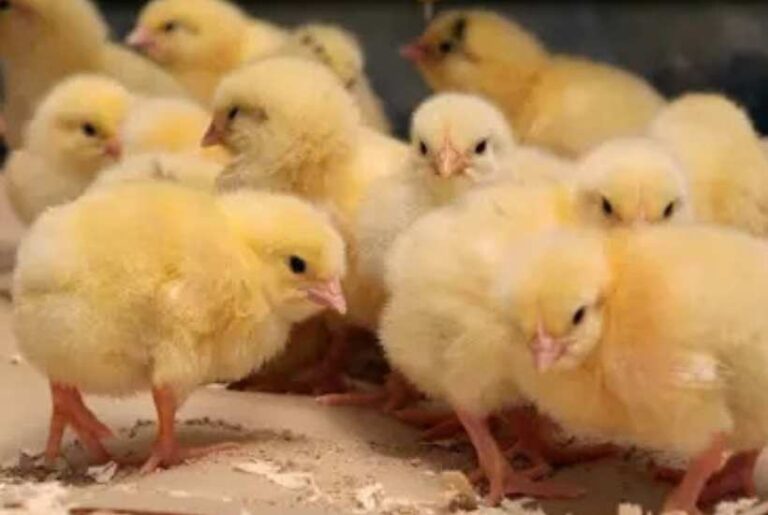
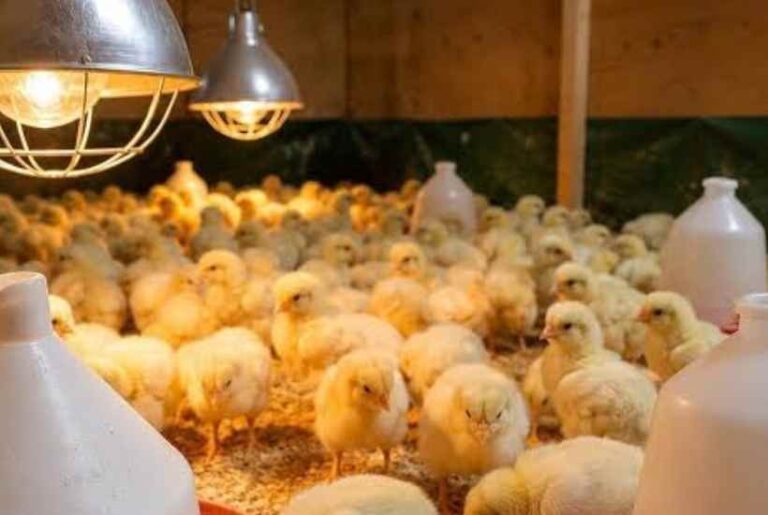
For broiler farmers, day-old chicks are one of the first production expenses.
Record:
- Number of chicks purchased
- Price per chick
- Transportation charges
- Delivery charges
- Mortality during transportation
- Other acquisition expenses
Do not calculate chick cost only on the number purchased.
If you buy 1,000 chicks but only 950 survive to the stage at which you calculate production cost, your effective chick cost per surviving bird is higher.
This is why mortality must always be included in profitability calculations.
3. Feed Is Often the Biggest Cost
Feed deserves particularly close attention because relatively small changes in feed efficiency can significantly affect the economics of poultry production.
Record:
- Quantity of feed purchased
- Price per bag
- Cost per kilogram
- Feed consumed
- Feed wastage
- Feed conversion
- Changes in feed prices
For broilers, monitor Feed Conversion Ratio (FCR).
FCR indicates how efficiently birds convert feed into body weight.
For example, if a flock consumes 2,500 kg of feed and produces 1,250 kg of live-weight gain, the simplified FCR is:
2,500 ÷ 1,250 = 2.0
The exact interpretation of FCR should account for the production system and how the figures are measured, but the principle is important:
Feed efficiency directly affects production cost.
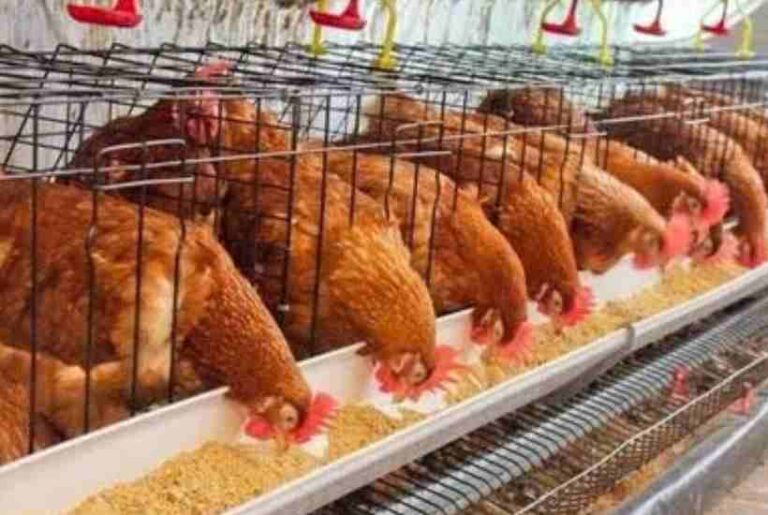
For layers, farmers should monitor feed consumption against egg production, such as feed required per dozen eggs or per crate.
4. Include Mortality in Your Cost Calculation
Mortality is more than a veterinary problem. It is a financial problem.
Consider a farmer who purchases 1,000 chicks and loses 100 birds.
The farmer has not simply lost 100 birds.
Money has already been spent on:
- The chicks
- Feed consumed
- Medication
- Vaccination
- Labour
- Heating
- Water
- Electricity
- Housing space
Therefore, mortality should be recorded and analysed throughout the production cycle.
A sudden increase in mortality should trigger an investigation rather than simply being accepted as part of poultry farming.
5. Calculate Labour Costs Properly
If you employ workers, record their wages and other employment-related costs.
Even if you personally manage the farm, your labour has economic value.
This is often overlooked by small-scale farmers.
If you spend several hours every day feeding birds, cleaning houses, collecting eggs, recording production and managing sales, that time represents a business resource.
Including owner labour in your internal calculations gives you a more realistic picture of the farm’s economic performance.
6. Don’t Forget Electricity and Fuel
Poultry farms may consume electricity or fuel for:
- Lighting
- Fans
- Water pumps
- Brooders
- Refrigeration
- Egg handling
- Security
- Other equipment
Where electricity supply is unreliable, generator fuel and maintenance can become significant expenses.
Record fuel consumption rather than simply estimating it at the end of the month.
This can reveal whether certain equipment or operating practices are unnecessarily increasing costs.
7. Include Medication, Vaccines and Veterinary Expenses
Health management is an essential production cost.
Record expenditure on:
- Vaccines
- Veterinary consultations
- Approved medications
- Disinfectants
- Biosecurity materials
- Laboratory tests where applicable
Do not interpret a lower medication bill as automatically meaning better profitability.
Preventive health management may reduce mortality and improve productivity.
The objective is effective health management, not simply spending as little as possible.
8. Calculate Water and Other Farm Expenses
Water may appear inexpensive, but pumping, treatment, storage and distribution can create costs.
Other expenses may include:
- Litter material
- Egg trays
- Packaging
- Cleaning materials
- Repairs
- Transportation
- Communication
- Security
- Waste disposal
- Equipment maintenance
Small expenses become significant when accumulated over months.
9. Account for Housing and Equipment
A poultry house does not last forever.
Neither do feeders, drinkers, cages, generators, pumps, batteries and other equipment.
Farmers should consider depreciation or replacement costs when calculating long-term production costs.
For example, if equipment costs ₦1 million and is expected to provide useful service over several years, the farmer should recognise that the equipment is being consumed gradually through use.
Ignoring these costs can make the farm appear more profitable than it actually is.
10. Calculate Cost Per Bird or Per Crate
Once all costs have been collected, calculate a useful production unit.
For broilers:
Total production cost ÷ number of birds sold = cost per bird
For example:
Total production cost = ₦5,500,000
Birds sold = 900
Cost per bird:
₦5,500,000 ÷ 900 = approximately ₦6,111 per bird
If the average selling price is ₦7,000, the difference is approximately ₦889 per bird before considering other relevant business costs.
For layers, farmers can calculate:
Total production cost ÷ number of crates produced
This gives a useful benchmark for pricing and management decisions.
11. Know Your Break-Even Price
Break-even is the point where revenue covers production costs.
If it costs you ₦6,500 to produce and bring one broiler to sale, selling below that level may create a loss, depending on which costs have been included.
Similarly, if your total cost of producing a crate of eggs is ₦5,000, selling significantly below that figure for an extended period is unlikely to be sustainable.
Knowing your break-even point helps you make better decisions when market prices change.
12. Reduce Costs Without Damaging Productivity
Cost reduction should never mean cutting essential inputs blindly.
Instead, look for inefficiencies.
Ask:
Where am I losing money?
It may be:
- Feed wastage
- Poor feed conversion
- High mortality
- Poor-quality chicks
- Excessive medication
- Fuel wastage
- Poor labour productivity
- Broken equipment
- Egg breakage
- Poor housing
- Theft
- Poor record keeping
For example, reducing feed wastage by improving feeder management may save money without reducing the nutritional intake of the birds.
That is a much better cost-saving strategy than simply reducing the amount of feed offered.
13. Improve Your Selling Strategy
Profitability is affected by both production costs and selling price.
Farmers should identify their target market before production where possible.
Potential customers may include:
- Households
- Restaurants
- Hotels
- Caterers
- Food businesses
- Retailers
- Wholesalers
- Institutions
- Direct consumers
Building reliable customers can reduce dependence on distress sales.
For eggs, consistent quality, reliable delivery and good customer relationships can help create repeat business.
14. Keep Records Every Day
You do not need complicated accounting software to start.
A notebook, spreadsheet or farm-management application can track:
- Number of birds
- Mortality
- Feed received
- Feed consumed
- Egg production
- Medication
- Vaccination
- Labour
- Electricity
- Fuel
- Sales
- Expenses
Review the figures weekly and monthly.
Your records should answer one important question:
“Is the farm becoming more or less efficient?”
15. Use a Simple Profitability Formula
A basic calculation is:
Total Revenue − Total Production Costs = Operating Profit
You can go further by calculating:
Profit per bird = Selling price per bird − Cost per bird
For layers:
Profit per crate = Selling price per crate − Cost per crate
These figures allow you to compare different production cycles and identify areas that need improvement.
A Simple Poultry Farm Profitability Checklist
Before declaring that your farm made money, calculate:
☐ Cost of day-old chicks
☐ Transportation
☐ Feed
☐ Mortality losses
☐ Vaccines and veterinary care
☐ Labour
☐ Electricity and fuel
☐ Water
☐ Litter
☐ Cleaning and biosecurity
☐ Equipment maintenance
☐ Housing/equipment depreciation
☐ Packaging and egg trays
☐ Transportation to customers
☐ Other operating expenses
☐ Total revenue
☐ Cost per bird or crate
☐ Break-even price
☐ Actual profit
Conclusion
Poultry farming can generate good income, but profitability should never be judged by the amount of money passing through the farmer’s hands.
A farm can generate millions of naira in sales and still have a disappointing profit margin if production costs are poorly controlled.
The solution is not necessarily to produce more birds.
Sometimes the answer is to produce more efficiently.
Reduce feed wastage. Improve feed conversion. Control mortality. Buy quality chicks. Maintain good biosecurity. Manage labour. Reduce unnecessary fuel consumption. Prevent egg breakage. Negotiate input prices. Develop reliable markets. And above all, keep accurate records.
The most important financial question for every poultry farmer is not:
“How much did I sell?”
It is:
“How much did it cost me to produce what I sold, and how much did I actually keep?”
Once you know that number, you can begin making informed decisions about pricing, flock size, feed management, expansion and investment.
Know your numbers, control your costs and manage your poultry farm as a business—not just as a flock of birds.
Note: The examples in this article are illustrations only. Actual poultry costs and selling prices vary by location, bird type, feed prices, production system, season and market conditions. Farmers should use their own current records when calculating profitability.