Poultry farming can be profitable, but disease outbreaks can quickly turn a promising farm into a major financial loss. Mortality, reduced growth, falling egg production, medication expenses, rejected birds and prolonged production cycles can all eat deeply into a farmer’s income.
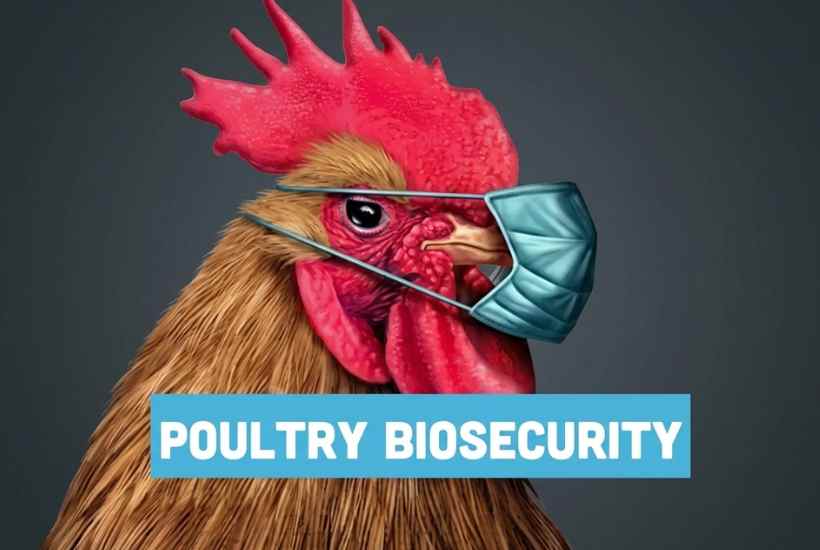
One of the most effective ways to protect a poultry farm is biosecurity.
Biosecurity simply means putting measures in place to prevent disease-causing organisms from entering your farm and, if they do enter, preventing them from spreading throughout the flock.
This is particularly important for Nigerian farmers operating small and medium-sized farms, where resources may be limited. Fortunately, good biosecurity does not always require expensive equipment. Many of the most effective measures involve discipline, cleanliness, controlled movement and good farm management.
Here are 15 practical measures every poultry farmer should implement.
1. Control Who Enters Your Farm
Every visitor represents a potential disease risk.
People may unknowingly carry pathogens on their shoes, clothing, hands or equipment after visiting another poultry farm, live-bird market or household keeping poultry.
Avoid unnecessary visitors inside poultry houses.
Install a simple farm entrance and clearly define areas that visitors are not permitted to enter. Keep a visitors’ record showing the person’s name, date of visit and reason for coming.
FAO identifies the movement of people and contaminated materials as important routes for disease introduction.
2. Provide Dedicated Farm Footwear and Clothing
Farm workers should ideally have footwear and protective clothing reserved specifically for poultry-house use.
Visitors entering poultry areas should also wear clean protective footwear.
Do not allow workers to move directly from another poultry farm into your poultry houses without changing and cleaning appropriately.
This simple practice can significantly reduce the movement of contaminated material into poultry houses.
3. Use Footbaths Correctly
A footbath at the entrance to each poultry house can provide an additional barrier against disease.
However, a footbath is not simply a container filled with disinfectant.
Dirty boots can introduce manure and organic material that reduces the effectiveness of disinfectants. Boots should first be reasonably clean, and the disinfectant should be prepared and replaced according to the product instructions.
Keep the footbath protected from rain, dirt and excessive dilution.
Nigeria’s poultry management guidance recommends restricting access and disinfecting equipment, while FAO guidance emphasizes appropriate footwear and footbaths as part of farm biosecurity.
4. Keep Wild Birds Away From Your Poultry
Wild birds can potentially introduce infectious agents onto a farm through droppings, feathers and contaminated surfaces.
Where practical, use appropriate netting, screens or other physical barriers to prevent wild birds from entering poultry houses.
Do not leave feed exposed where wild birds can feed.
Also prevent wild birds from accessing water sources, feed stores and areas around poultry houses.
FAO specifically recommends preventing contact between poultry and wild birds and their droppings.
5. Control Rats, Mice and Other Pests
Rodents can contaminate feed, water and equipment.
Keep vegetation around poultry houses under control and remove rubbish, unused materials and other places where rodents can hide.
Store feed securely in rodent-resistant containers or rooms.
Do not leave spilled feed around feeders.
A good pest-control programme should be continuous rather than something done only when rodents become obvious.
6. Separate Poultry From Other Animals
If you keep chickens, ducks, turkeys, goats, pigs, dogs or other animals on the same property, manage them carefully.
Different bird species should ideally be separated.
Do not allow domestic animals to wander freely through poultry houses.
Keep dogs and cats away from feed stores and poultry housing areas.
Reducing unnecessary contact between different animal populations can reduce opportunities for disease transmission.
7. Quarantine New Birds
One of the biggest mistakes farmers make is introducing newly purchased birds directly into an established flock.
New birds may look healthy while carrying an infectious disease.
Keep newly acquired birds separately for an appropriate quarantine period and observe them before introducing them to the main flock. Nigeria’s National Farmers’ Help Line/NAERLS guidance recommends separating new or sick birds, with a two-week quarantine period cited in its general disease-management guidance.
Where possible, obtain birds from reputable suppliers with good health-management practices.
8. Separate Sick Birds Immediately
When a bird becomes sick, do not leave it among healthy birds unnecessarily.
Establish an isolation area where sick birds can be separated while you seek veterinary advice.
Pay attention to warning signs such as:
- Sudden deaths
- Unusual weakness
- Difficulty breathing
- Diarrhoea
- Reduced feed or water intake
- Nervous signs
- Swollen body parts
- Sudden reduction in egg production
- Unusual mortality
Early recognition can help prevent a small problem from becoming a flock-wide outbreak.
9. Clean Feeders and Drinkers Regularly
Dirty feeders and drinkers can become sources of contamination.
Clean drinking equipment regularly and prevent faecal material, litter and dirt from entering the water.
Make sure drinkers do not leak excessively and create permanently wet litter.
Provide birds with clean, safe drinking water.
NAERLS recommends regular cleaning of waterers and feeders and emphasizes clean water as part of disease prevention.
10. Keep Poultry Houses Dry and Clean
Wet litter creates an unhealthy environment and can encourage the persistence and spread of pathogens.
Remove excessively wet litter promptly.
Repair leaking drinkers and roofs.
Ensure adequate ventilation so moisture does not accumulate inside the house.
The area surrounding the poultry house should also be kept clean. Remove rubbish and stagnant water and avoid creating conditions that attract rodents and wild birds.
11. Do Not Share Equipment Between Farms
Farm equipment can carry infectious organisms from one poultry operation to another.
Avoid sharing crates, feeders, drinkers, wheelbarrows, boots, tools and other equipment between farms.
If equipment must be moved between locations, it should be thoroughly cleaned and disinfected before entering another poultry site.
FAO specifically recommends that equipment should not be shared between poultry sites unless it is properly cleaned and disinfected.
12. Practise All-In, All-Out Management
Where your farm structure allows it, keep birds of the same age together and avoid mixing different age groups.
After a batch is sold or removed, clean and disinfect the poultry house before introducing the next batch.
This approach, known as all-in, all-out management, helps reduce the opportunity for disease organisms to remain in the house and infect the next flock.
NAERLS identifies all-in/all-out management as an important disease-control measure.
13. Follow a Proper Vaccination Programme
Biosecurity is not a replacement for vaccination.
Vaccines help protect birds against important poultry diseases, but vaccination programmes should be designed according to the diseases relevant to the farm and locality.
Work with a veterinarian or qualified animal-health professional to establish an appropriate programme.
Store and administer vaccines according to the manufacturer’s instructions.
Do not assume that vaccination alone makes a farm safe. A vaccinated flock can still face serious disease challenges if biosecurity is poor.
14. Control Farm Vehicles, Egg Trays and Deliveries
Vehicles entering farms can carry contaminated soil, manure and other materials.
Where possible, restrict vehicle access to poultry areas.
Create a designated loading or collection point away from poultry houses.
Pay particular attention to egg collection, feed deliveries, bird transportation and waste removal.
Used egg trays also deserve special attention. They may have originated from another farm and can carry contamination if they are brought onto your premises without appropriate cleaning and disinfection.
15. Report Unusual Illness and Deaths Quickly
Do not wait until hundreds of birds are dead before seeking help.
If you observe unusual mortality, sudden drops in egg production or other serious signs, contact your veterinarian or relevant veterinary authorities promptly.
Do not sell, give away or move obviously sick birds to another location.
FAO’s current recommendations emphasize reporting sick or dead poultry and strengthening farm biosecurity, particularly in relation to avian influenza risks.
Biosecurity Is a Daily Habit, Not an Emergency Measure
One of the biggest misconceptions about biosecurity is that it becomes important only when there is an outbreak.
The opposite is true.
Biosecurity works best before disease arrives.
Once an infectious disease has entered a farm, controlling it can become much more expensive and difficult.
For small and medium-sized Nigerian poultry farmers, the good news is that effective biosecurity does not have to begin with expensive technology.
Start with the basics:
Control people.
Control birds.
Control equipment.
Control vehicles.
Control pests.
Control water and feed contamination.
Clean regularly.
Separate sick birds.
Quarantine new birds.
Vaccinate appropriately.
Observe your flock every day.
The 15-Point Nigerian Poultry Biosecurity Checklist
Before leaving the farm today, ask yourself:
☐ Are unnecessary visitors prevented from entering poultry houses?
☐ Do workers have dedicated poultry-house footwear?
☐ Are footbaths properly maintained?
☐ Are wild birds prevented from accessing poultry houses and feed?
☐ Is rodent control active?
☐ Are different poultry species separated?
☐ Are newly purchased birds quarantined?
☐ Are sick birds isolated?
☐ Are feeders and drinkers clean?
☐ Is litter dry?
☐ Is poultry equipment kept separate between farms?
☐ Are different age groups properly managed?
☐ Is the vaccination programme up to date?
☐ Are vehicles and egg trays controlled?
☐ Are unusual sickness and deaths reported promptly?
If you cannot answer “yes” to several of these questions, your farm probably has biosecurity gaps that deserve immediate attention.
Conclusion
Disease prevention is cheaper than disease treatment.
For Nigerian poultry farmers, particularly those operating small and medium-sized farms, biosecurity should be viewed as an investment rather than an unnecessary expense.
A farm that controls movement, maintains hygiene, protects feed and water, separates birds appropriately, controls pests, quarantines new birds, follows appropriate vaccination programmes and responds quickly to unusual illness is better positioned to protect its flock and its income.
As poultry production becomes increasingly intensive, the importance of biosecurity will continue to grow. FAO emphasizes that biosecurity is central to preventing pathogen introduction and spread, while recent Nigerian guidance similarly places access control, sanitation, vaccination, quarantine and flock management at the centre of poultry disease prevention.
Your first line of defence against poultry disease is not medicine. It is good farm management.
Protect your birds before disease arrives.
Good biosecurity protects birds.
Healthy birds protect productivity.
And productive birds protect your business.
Important note: Disease symptoms can overlap between different conditions. Farmers should seek veterinary or animal-health advice for diagnosis and treatment rather than relying on symptoms alone.